In our own write
Anyone who has been teaching a language for a long time is sure to have lots of staple activities which they keep coming back to because they know that they work.
For me one of those activities is the dialogue notebook. I’ve used it with so many classes in so many different contexts around the world and I wrote about it in my first book for Cambridge University Press ‘Dialogue Activities’
The basic idea is that each student has a notebook which is used as a kind of long term written conversation between the teacher and the student. The teacher might write a question to the learner at the beginning, give it to the student and then the student takes it home and writes a reply, and maybe another question to keep the conversation going. This is then handed back to the student in the next class.
Here’s a real example from more than 20 years ago when I used to teach English to beginner level refugees in Birmingham.
Nick: In your letter you say that you haven’t got a wife or sons, but you’ve got one brother and five sisters. That’s a big family! Do they live in England or in Yemen?
Hassan: This OK. But my family they live in Yemen. No in England. But I live in a England
Nick: Where do they live in Yemen? In a city or in the countryside? What is Yemen like? Is it a beautiful country?
Hassan: Yes They live in yemen in a city yafa – in Yemen likes drink coffee and like go to the sea
Nick: I see – people in Yemen like drinking coffee and going to the sea. But what is Yemen like? Is it a big country? Is it beautiful? Is it very hot? Is it expensive?
A few points about this which are think are worth noting…
1) I tend to keep the conversation as natural and as personalised as possible. I don’t explicity correct things but I do reformulate things where it feels right to do that (you can see this in the example above)
2) I use closed questions where appropriate to model language (Is it a big country, Is it beautiful etc)
3) I think all students everywhere find this activity motivating and they want to read what you have written to them. This is very different from how they might feel when you hand them back a piece of writiing that they have done with lots of corrections in red ink.
4) Sometimes the students write things that they wouldn’t normally speak about in class, and which are very personal. This makes this activity partcularly powerful and can really help with motivation to read and write in English.
So with these points in mind, I’ve always felt that this is a good activity to do with our children from Gaza studying in our space in Cairo. Being able to write in English is so important for them, both in terms of their mental health and well being, and also for future academic success.
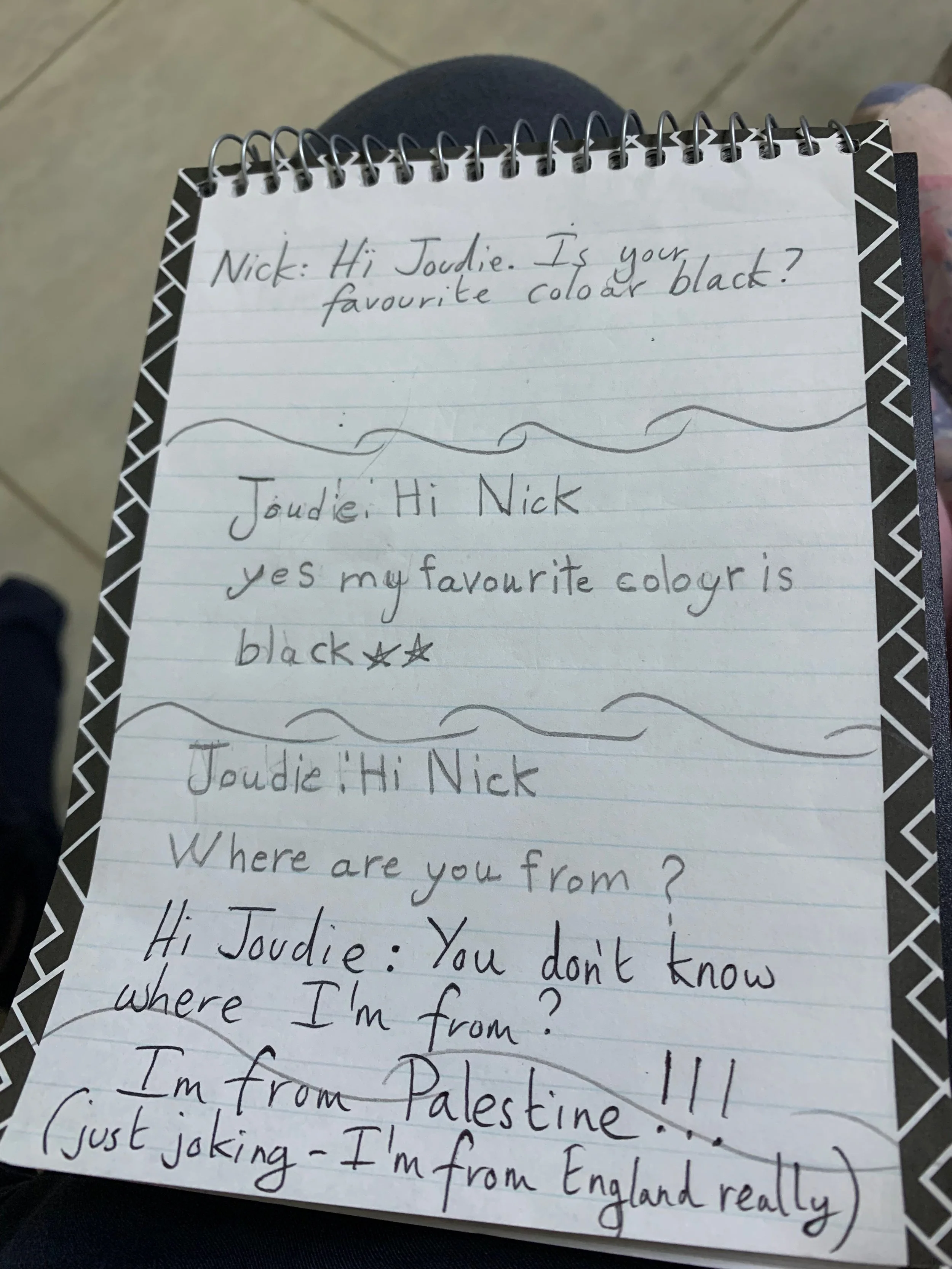
Here’s an example from the early days of the school, in Autumn 2024. (By the way I’ve absolutely no idea why I’ve misspelled the word ‘colour’ in my first question:-) )
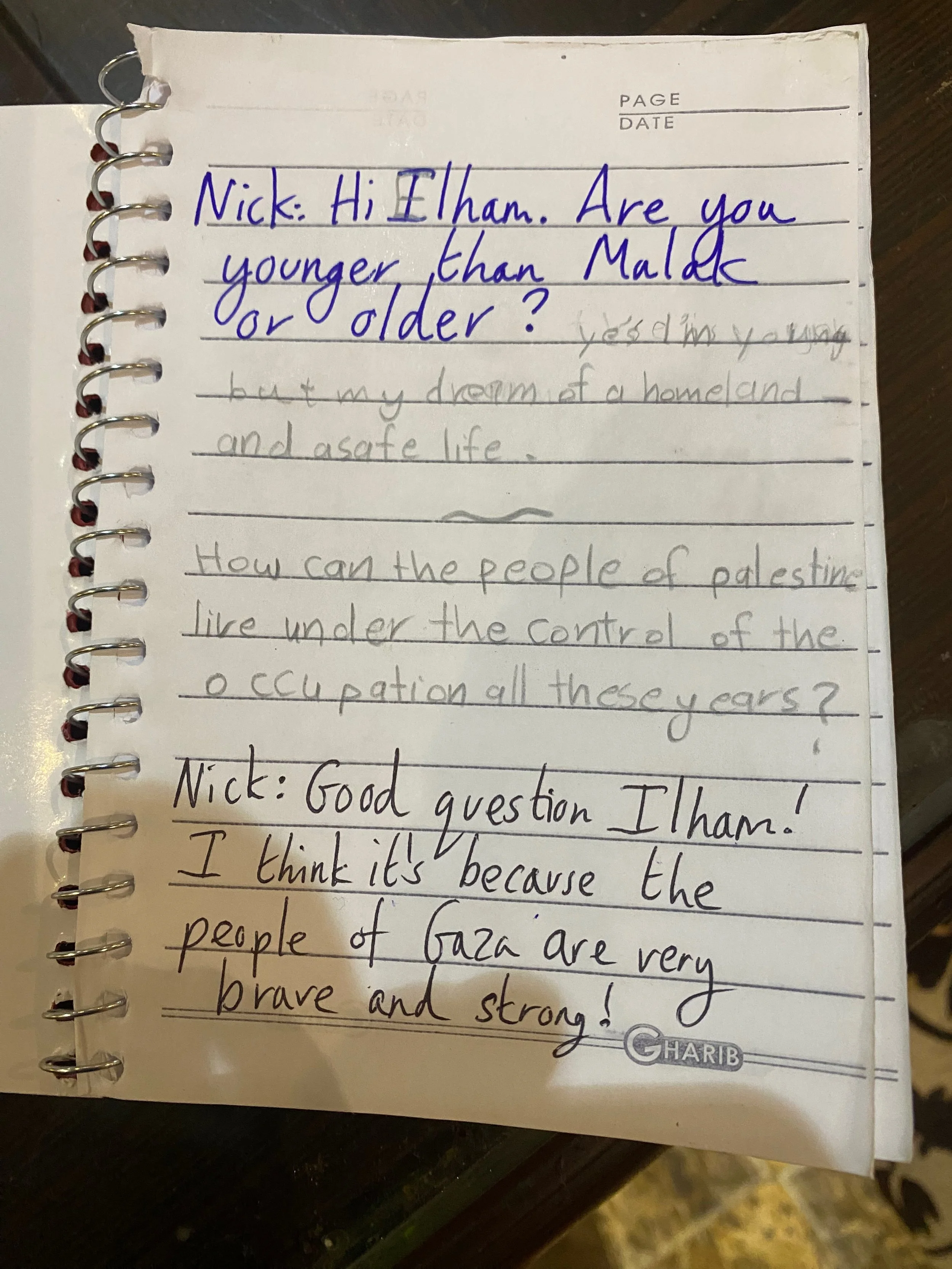
And here’s an example from my recent visit to the school. I love how, in this example, Elham quickly changes the topic of the conversation away from my contrived topic (trying to practise comparative adjectives) to something that she really wants to speak about.
So there it is, one of my favourite language learning activities which I’m still using after more than 35 years of teaching. I think the real beauty of this activity is that it it encourages learners to be users of English in their own right, not simply regurgitating what the teacher wants them to write. And this, in my opinion is where the real learning happens.
What do you think about this activity? How would you use it for your context? Please write a comment below.