The Lost Art of Letter Writing—and Why It Matters for Young Learners
By Safa, Volunteer Coordinator
In language learning, writing is often viewed as a daunting, even dull, skill. Drawing on my own experience as a teacher from Gaza, I know how little attention it can receive in English classrooms. But what better way to motivate young learners to write than putting pen to paper for a friend—sharing stories about their day, their dreams, or simply introducing themselves?
This is exactly why we've been running our penpal projects at The Hands Up Project. They connect learners in Gaza with friends from around the world through handwritten letters, creating bonds that transcend borders.
After a beautiful and successful exchange with schools in Cuba last year, we are now thrilled to see our learners—both in Gaza and those displaced in Egypt—exchanging letters with peers in Bangladesh.
A Letter Across Continents
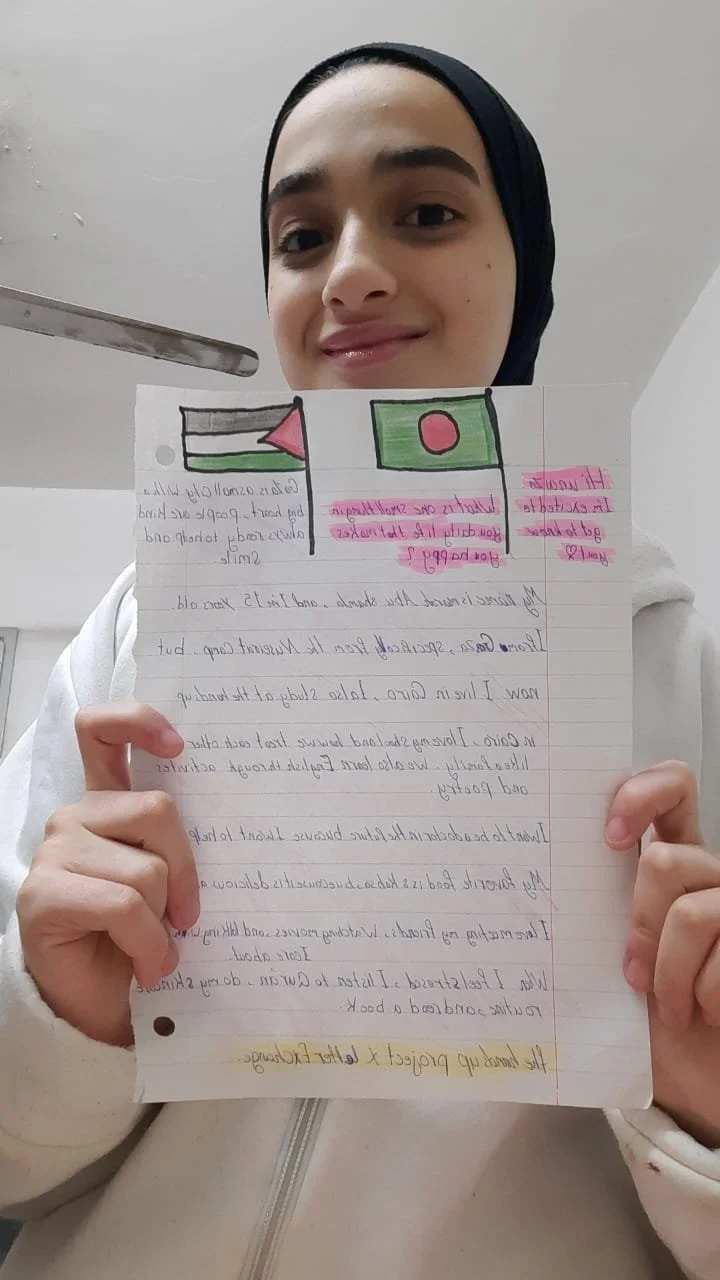
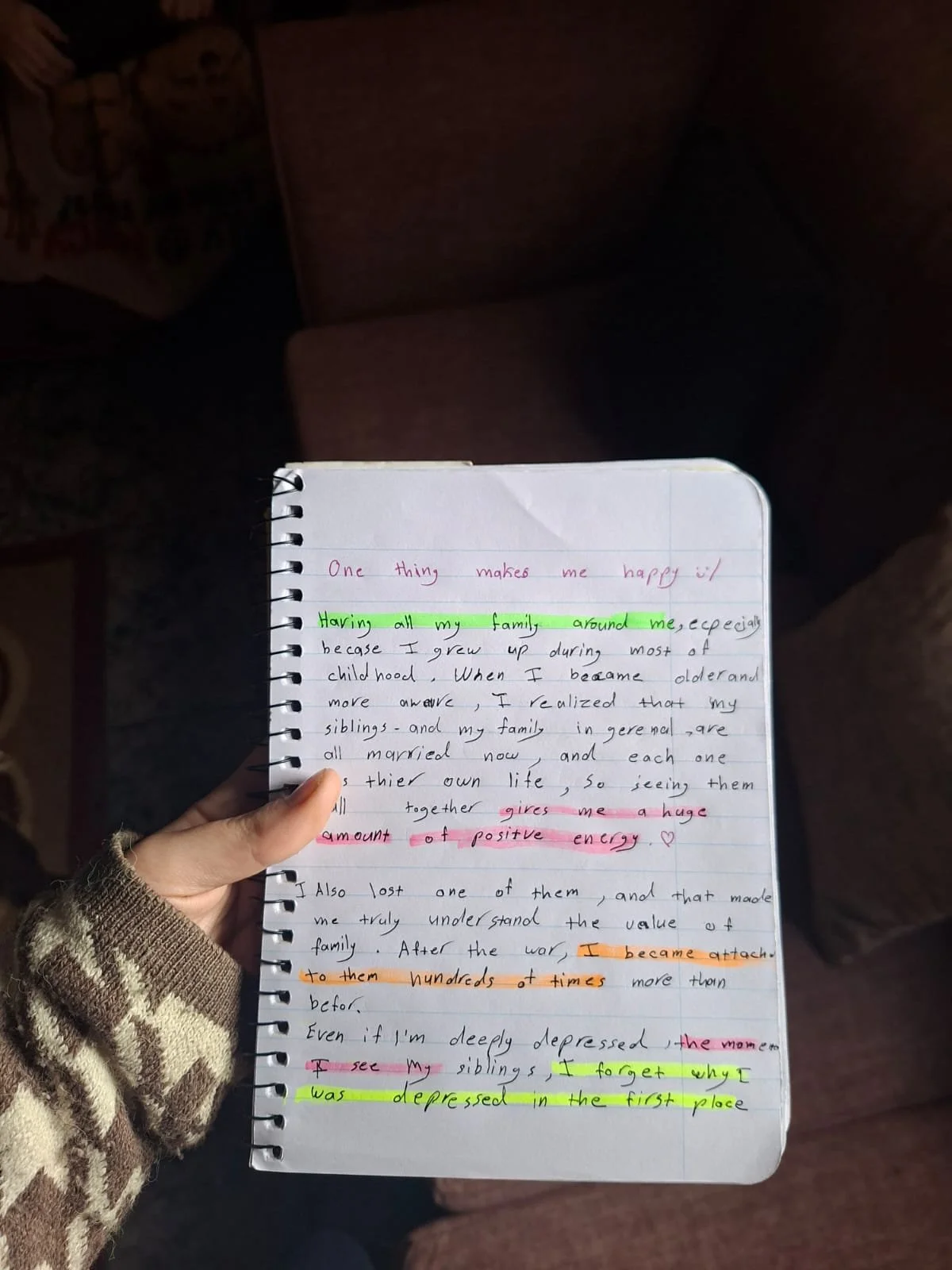
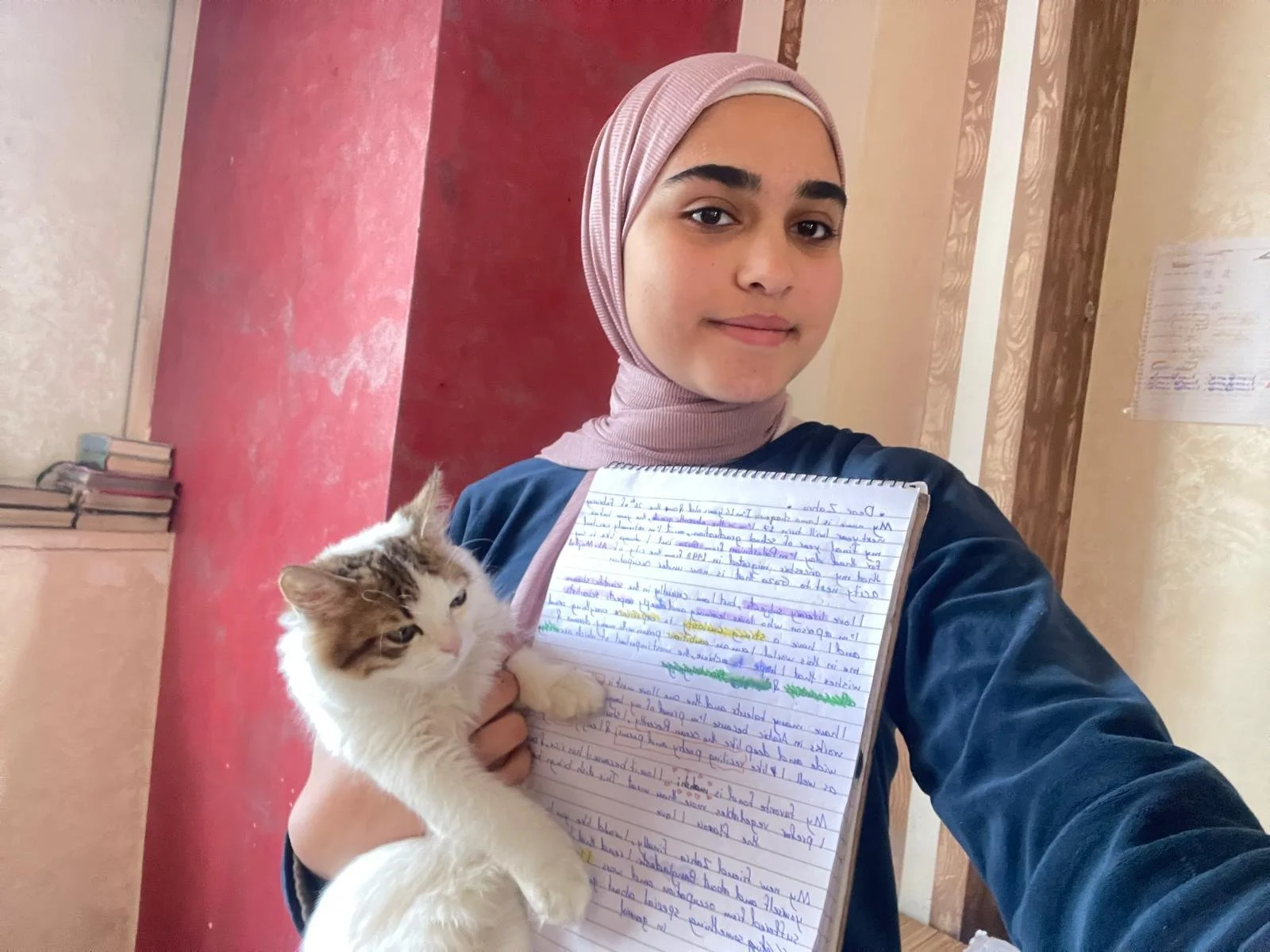
Below is an example of one such exchange between Miryam in Gaza and Unaiza in Bangladesh. Two young voices, miles apart, finding connection through words.
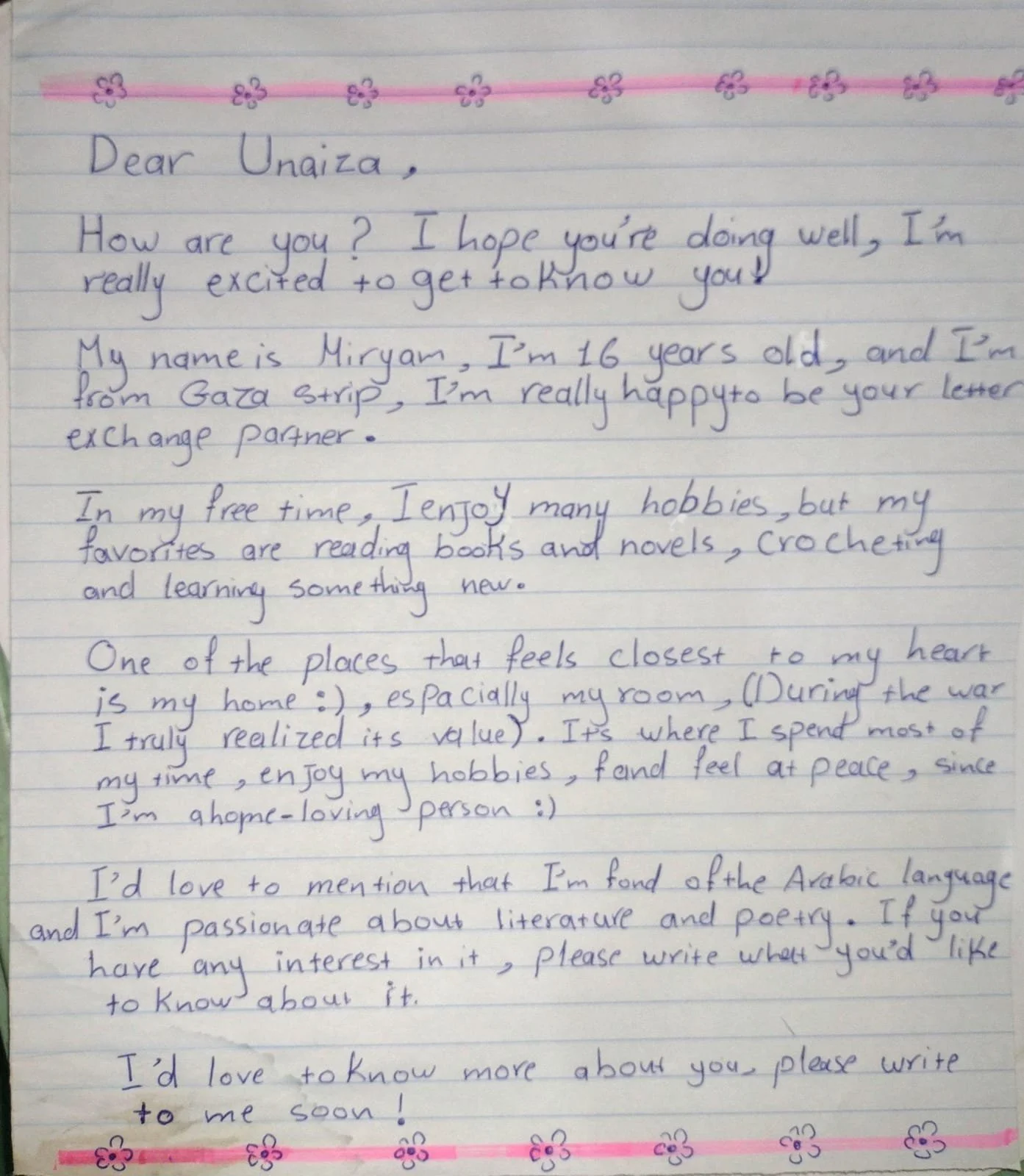
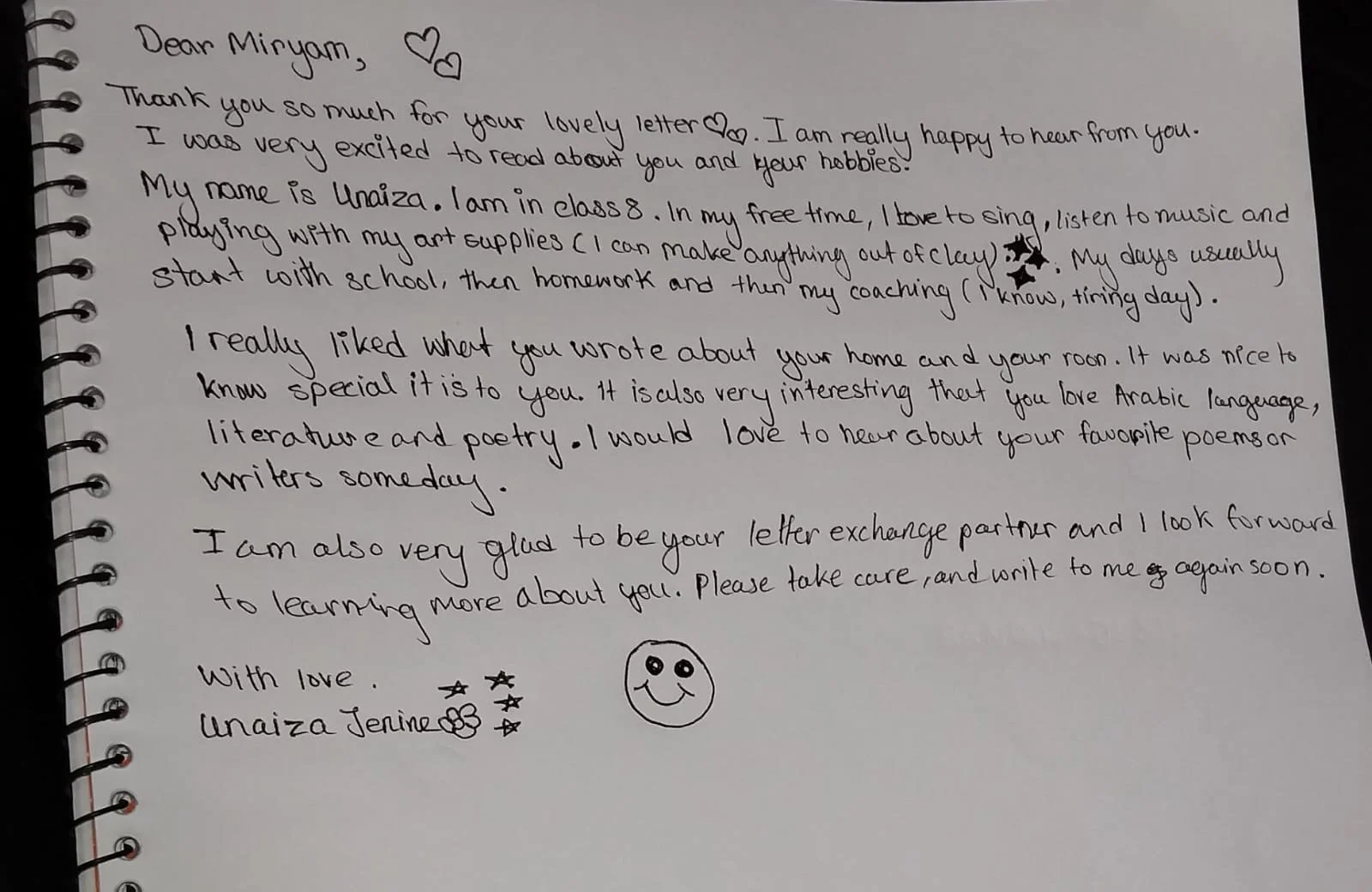
The process is beautifully simple. With the help of our wonderful volunteers—like Zuhayer, who made this connection possible—each student is paired with a peer from another country. They exchange handwritten letters monthly, writing about anything that matters to them: their personal lives, their culture, their interests, or simply how their week has been.
The goal goes far beyond practicing English. In fragile contexts with weak internet connections and different time zones, letters become a lifeline—a tangible, patient form of connection. This project is about cultural exchange, mutual understanding, and building friendships that no border can limit.
Learning That Sticks
Still wondering how letters can truly help children learn English? Here's what Rahaf, one of our students, shared after receiving a response from her friend Israt:
"I loved every word she wrote. There were some expressions I had never seen before—like 'go through' for a difficult experience, or 'take a lot of courage' and 'touch my heart'—two expressions that are so similar to what we say in Arabic. I also really appreciated the heartfelt words of support from her."
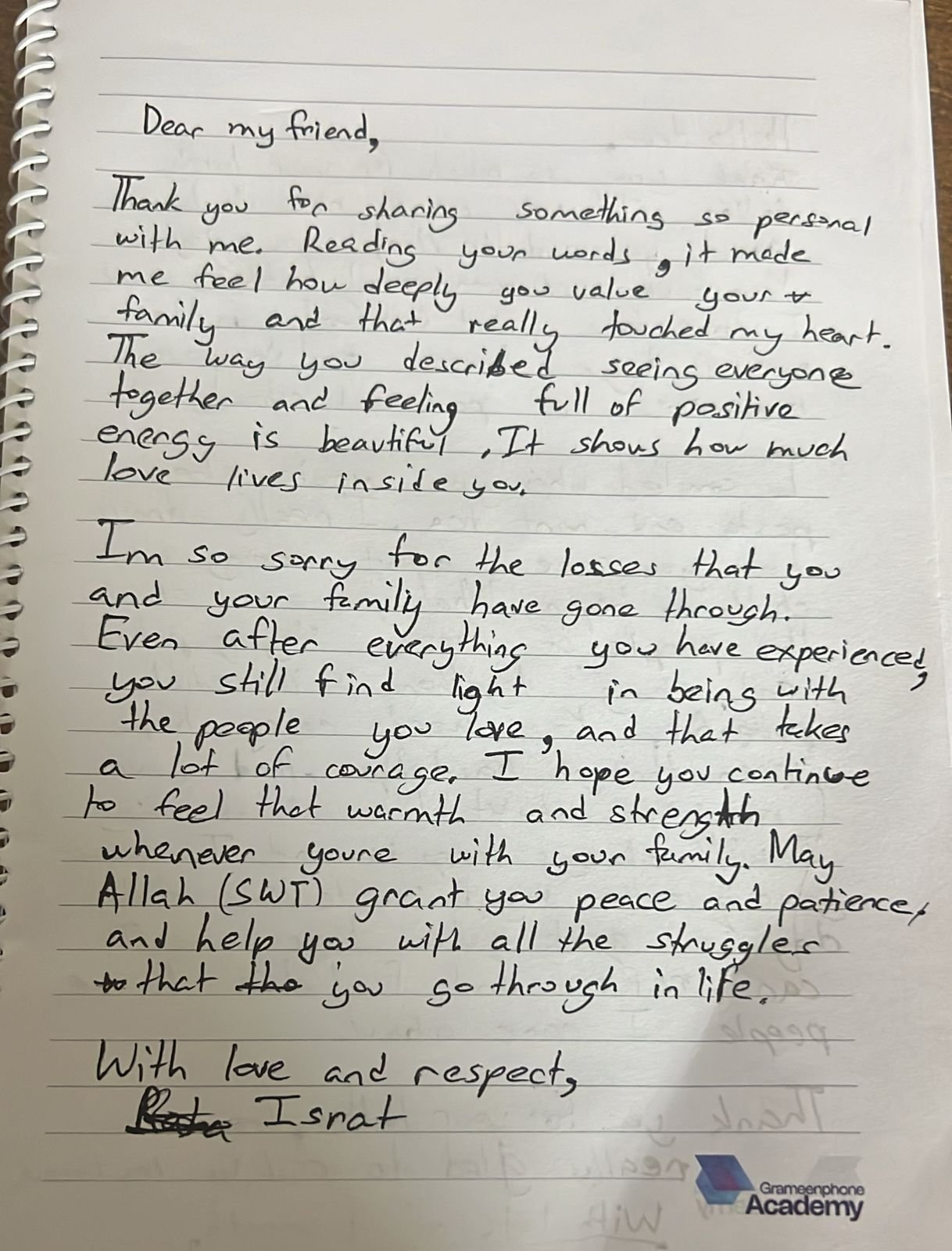
Beyond the joy of connection, and unlike quick messages or chats, writing a letter invites reflection. Learners take their time, think carefully about how to express themselves, and naturally become more aware of spelling, punctuation, and clarity—skills that are harder to practice in fast-paced digital spaces.
This is language learning at its most meaningful: not through worksheets or drills, but through connection, emotion, and the joy of being heard.
Join Us in Building Bridges
At The Hands Up Project, we believe that learning is most powerful when it brings people together. And nothing does that quite like a letter.
If you're a teacher, I'd love to hear from you:
Have you used letter writing in your classroom?
What creative ideas do you have for making this exchange even more meaningful?
And if you'd like to connect your students with ours, please reach out. We would be honoured to support you in building bridges and bringing young voices together.
With love,
Safa