A Summer of Stories!
By one of our longest standing HUP volunteers (Sue Piper)
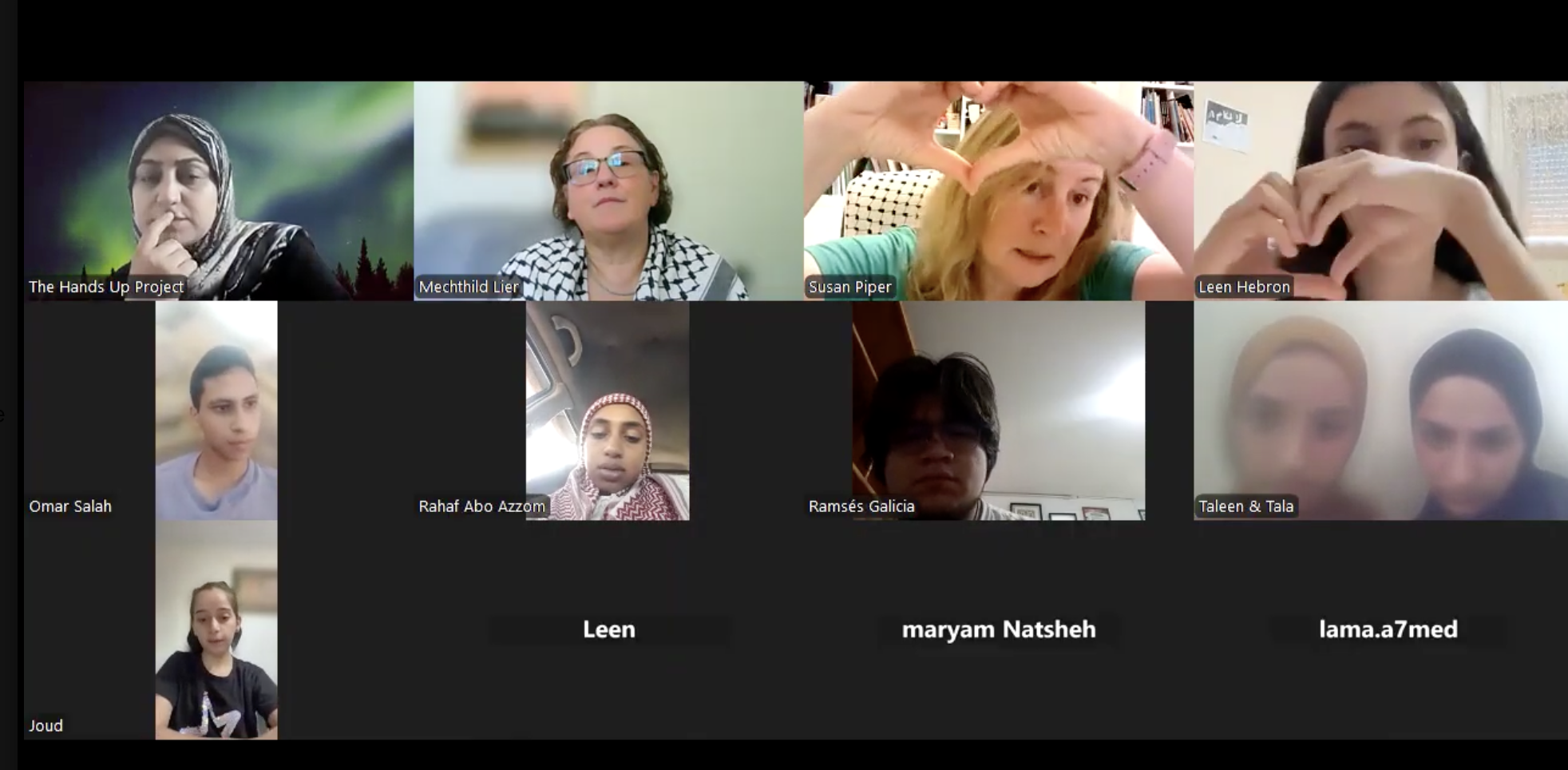
It was a pleasure to lead the Storytelling Techniques course for HUP this summer alongside Sahar Salhar and some amazing volunteers. I joined HUP in 2020 during covid, after being to Palestine in 2017, I wanted to get more involved in working with Palestinian children in schools. HUP allowed me to link up and tell stories with children in the West Bank and Gaza. The simple act of telling a story became much more than entertainment — it became connection, healing, and a bridge to the world beyond their immediate reality, as well as helping them improve their language skills, and giving them a platform to speak about their lives in a language that connects them to people everywhere.
I’m sure we’d all agree that there are so many ways to tell a story.. so I broke the course down into six weeks.
Week 1 -Stories with pictures. For this week, we looked at Joha and the Donkey from Stories Alive! Using the pictures helped students visualise and predict the story as well as focus on the characters’ faces and expressions, especially the laughing faces of the townsfolk giggling at Joha and his antics!
Week 2 - Stories with objects. This week, we listened to the story ‘Heart of Gold’ using several objects to bring the story alive. A special box, a statue, a heart of gold. We talked about how objects can turn invisible thoughts and feelings into physical things that readers or listeners can see, touch, and understand.
Week 3- Stories with rhymes and raps. This week, we listened, sang, and rapped to Pete the Cat, giving students chunks of language to help tell the story! We also watched the brilliant storyteller Michael Rosen tell We’re Going on a Bear Hunt and we talked about facial expressions and body language techniques, too.
Week 4 - Stories with puppets. This week, we looked at many different types of puppets: hand puppets, stick puppets, and finger puppets. I told the story of Joha and the Grapes using very simple stick puppets. We talked about how puppets turn a simple reading or spoken story into an interactive, visual experience that captures and holds attention.
Week 5 was all about using everything and nothing! This week, I told the Palestinian story of Ghaddar the Ghoul using chants, puppets, and pictures. I also told the story of the Three Sons using oral storytelling techniques only.
Week 6 was all about the students themselves telling us their own stories! We listened to Leen, Omar, and others tell us stories in THEIR own way. It was great to see how their confidence and skills had improved over the weeks.
The course reaffirmed my belief in the power of storytelling to connect and cross borders. Our work with children in HUP is rooted in the belief that education and voice are inseparable. Through storytelling and English language learning, I witness children not just learning new vocabulary, but reclaiming their narratives, believing in their potential, and finding human connection in a world they perceive has abandoned them.
And more than anything, this work reminds us all that children — everywhere — deserve to learn, to speak, and to be heard.
Leen in Hebron says, “Ever since I was little, I’ve loved talking and creating imaginary senses with my toys; however, I never thought it would turn into a real passion..
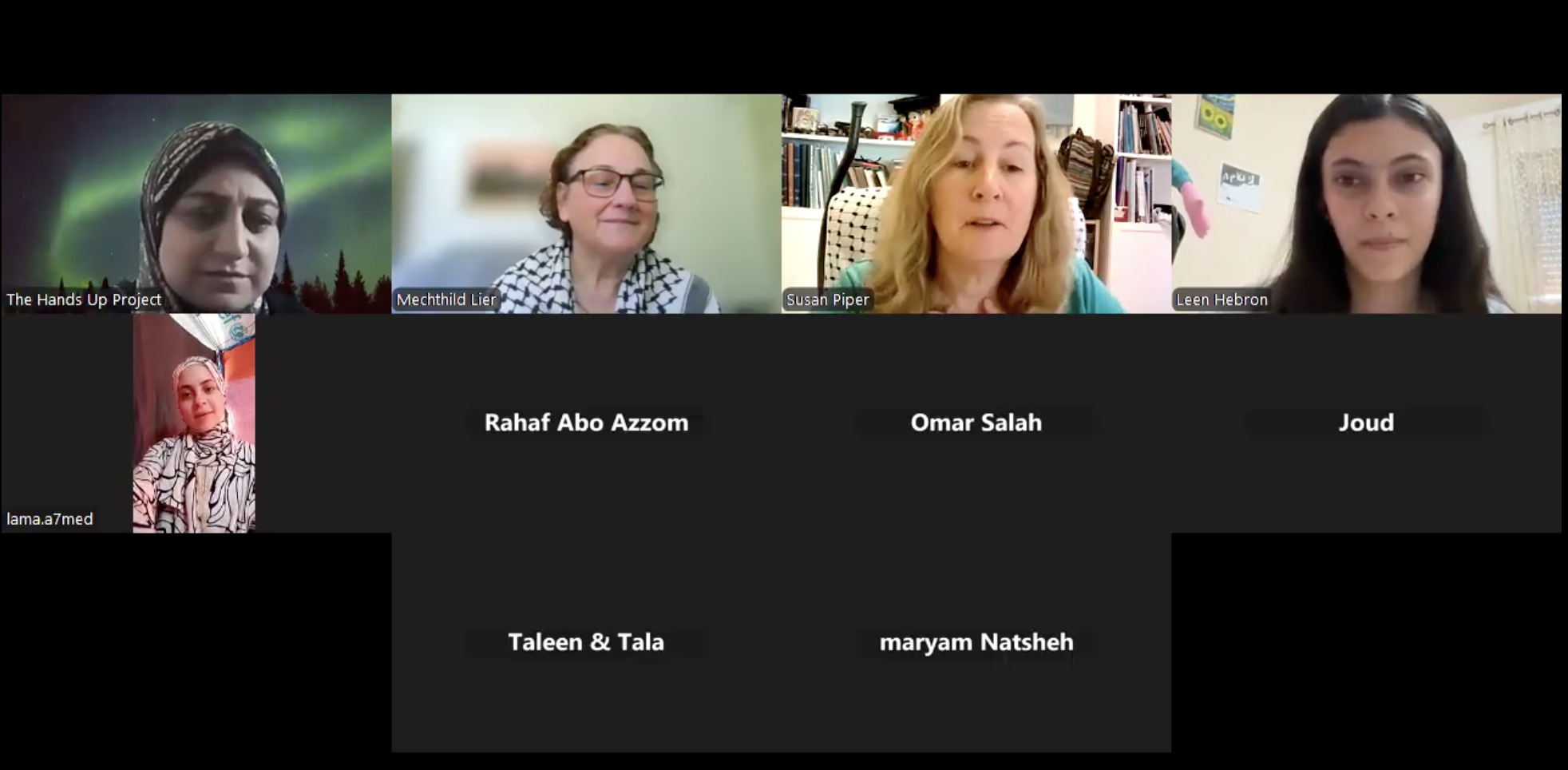
Luckily, this storytelling course totally changed my mind. It made me realize that you can shape your own story with unlimited, creative ways of telling it, and this is exactly how I had the perfect confidence and skills to tell a story with absolute excitement and a great sense of curiosity at the same time”.