Finding My Voice Through Drama
By Haya Orouq
What does it really mean to “find your voice” in English?
For me, it was not about grammar rules or memorising vocabulary. It was about confidence, identity, and expression.
In this blog, I share my journey as a learner from Gaza and my first experience presenting at the IATEFL conference, where I spoke about how drama and storytelling helped me grow from a shy student into a confident English speaker.
This story is primarily aimed at secondary learners, although the ideas can be applied across age groups.
Where It All Began
I started learning English as a young student in Gaza. I was always a high achiever, consistently ranking first in my class with a GPA above 99.
However, being successful academically did not mean I was confident. I loved English, but I was too shy to speak.
Everything changed when my English teacher introduced me to the Hands Up Project. Through online sessions based on storytelling and drama, I began to experience English in a completely different way.
At first, I understood only parts of what was said. I was nervous, quiet, and afraid of making mistakes. But slowly, things started to change.
From Silence to Speaking
The sessions I joined were not focused on perfection. They focused on communication. What made the difference?
● A safe and supportive environment
● Opportunities to speak and interact
● Encouragement to make mistakes
Over time, I began to take small steps:
● introducing myself
● answering simple questions
● participating in discussions
These small moments built my confidence. I realised that making mistakes was not something to fear—it was part of learning.
The Power of Drama
One of the most powerful experiences in my journey was taking part in a remote theatre competition.
Together with my classmates, we:
● chose a meaningful topic
● wrote our own script
● rehearsed and performed in English
Our play, The Shadow Girl, explored how social media can affect identity and create a sense of illusion.
Through this process, English became more than a subject. It became something I could live and express.
Standing on stage and performing in English for the first time was a turning point. It helped me overcome fear and build real confidence.
Learning Beyond the Classroom
In 2020, I participated again in another theatre project. This time, due to COVID-19, we performed online.
Even without a physical stage, the impact remained strong.
I also had the opportunity to take part in an intercultural project with young people at the War Childhood Museum in Sarajevo. We performed our play and discussed our experiences together.
This showed me that:
● language can connect people across cultures
● storytelling can create understanding
● young people’s voices matter
From Learner to Leader
As I became more confident, my role changed. I started supporting younger students in the drama club:
● encouraging them to speak
● helping them create plays
● reminding them that mistakes are normal
This experience taught me that teaching is not only about knowledge—it is about connection and support.
My First IATEFL Presentation
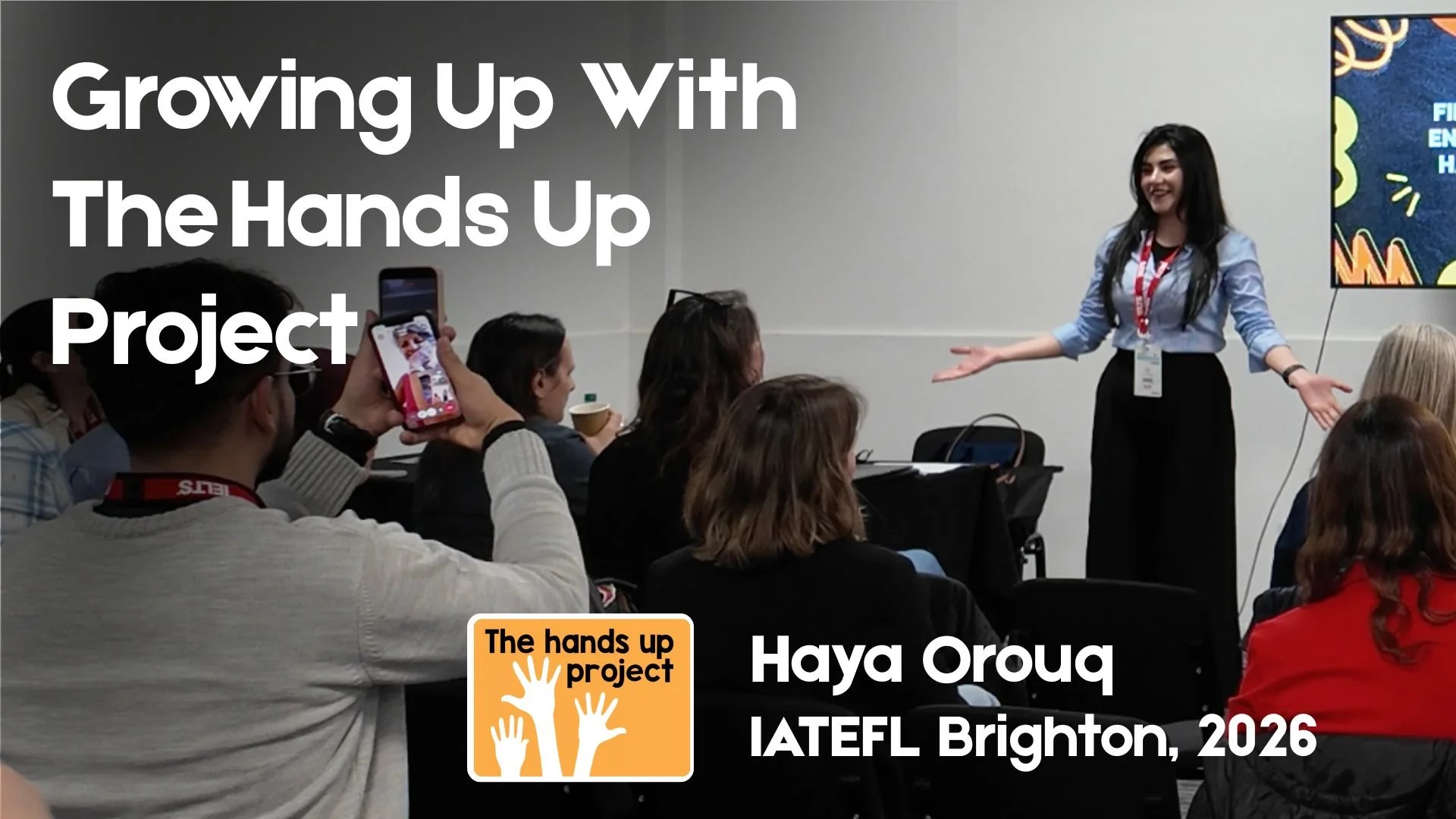
This year, I had the opportunity to present at the IATEFL Conference for the first time. It was also my first time attending and presenting at an international conference. I was incredibly happy that my talk was selected as part of the YLTSIG Showcase. However, the journey to get there was not easy.
My visa was rejected twice. Just three days before the conference, it was finally approved.
It felt unreal. After all the waiting and uncertainty, I finally made it.
Standing in front of an audience and sharing my story as a former learner was a very powerful experience. It was not just about presenting—it was about connecting with others and showing a different perspective: the learner’s voice.
Why the Learner’s Voice Matters
As teachers and educators, we often focus on methods, materials, and outcomes. But we sometimes forget one important thing:
● how learners actually feel
From my experience, what helped me most was:
● feeling safe
● being encouraged to speak
● being allowed to make mistakes
Creative approaches such as drama and storytelling:
● build confidence
● encourage participation
● give students a voice
A Message from Palestine
For me, this journey has a deeper meaning.
Coming from Palestine, I know that there are many young people with powerful stories to share.
Many of them:
● have ideas
● have creativity
● have voices
But they do not always have the opportunity to be heard.
Learning English gave me the chance to share my story with the world. And I believe every learner deserves that chance.
Final Thoughts
Language learning is not just about grammar and vocabulary.
It is about:
● identity
● confidence
● expression
Creative tools like drama and storytelling can transform the learning experience. They help learners not only learn a language, but live it, feel it, and use it to tell their own stories.
Because in the end, learning English is not just about finding the right words. It is about finding your voice.
And every voice matters.
Author Bio
Haya Orouq is a Palestinian student from Gaza, currently based in Cairo. She works with the Hands Up Project as a theatre specialist and social media manager. She is passionate about using drama and storytelling to help young learners build confidence and find their voice in English.