Peace is our harvest
A Little about Bridges to Gaza
A couple of weeks ago, I had the pleasure of co-leading a creative writing and poetry workshop as part of the Bridges to Gaza project. Bridges to Gaza is a project of the HUP, started by our coordinators, Ashraf and Sahar. Every week, a volunteer, on a rotating basis, co-leads a session with Majd, the students’ teacher in
Gaza, with the help of Sahar, the coordinator, is also in Gaza.
The students are usually given something to prepare beforehand: a theme, a story, some questions to think about, or, in my case, some poems to read. As Ashraf told our group of volunteers, ‘Our goal is to help these students share their stories and stay connected to the outside world. Right now, many feel deeply isolated and desperate … we want to ensure the world listens to them so they know they are cared for and not forgotten.’
At first, I thought these presentations took up too much time that could otherwise be spent on spontaneous speaking and games. However, I’ve come to see that they are beneficial in several ways. They create a sense of expectation, and the students seem to look forward to the sessions. They also give every student a chance to speak, including those who are less confident or spontaneous. And, as teachers in Gaza have spent the past three years teaching large groups of students of different ages and levels, the circumstances have made them experts at differentiating their teaching. I saw this first-hand with Majd, who expertly adapted my instructions for her students, making sure everyone could participate at their own level.
A word from Majd
From my perspective, these sessions have become much more than English lessons. They give my students a chance to speak, create, and express themselves at a time when opportunities to do so are limited. I have seen how excited they are to prepare for each session and how proud they feel when they share their ideas, poems, and writing with others.
Working alongside the volunteers has also been a very meaningful experience for me. We may be in different places, but through these sessions, we are able to create a shared space where the students feel heard, encouraged, and connected. I especially appreciate the opportunity to bring their voices into the wider world and to show that, behind the difficult circumstances they live through, there are young people with imagination, creativity, dreams, and so much to say.
For me, one of the most powerful moments is seeing how differently each student responds to the same poem or piece of art. Their responses often reflect their own experiences and feelings, and sometimes they surprise me with the depth and beauty of their words. These moments remind me why creative activities matter: they give students not only a chance to learn, but also a chance to express who they are. I am very grateful to be part of Bridges to Gaza and to share this journey with the students and volunteers. I hope we can continue creating these spaces for creativity, connection, and expression — and, most importantly, continue reminding our students that their voices matter and that the world is listening.
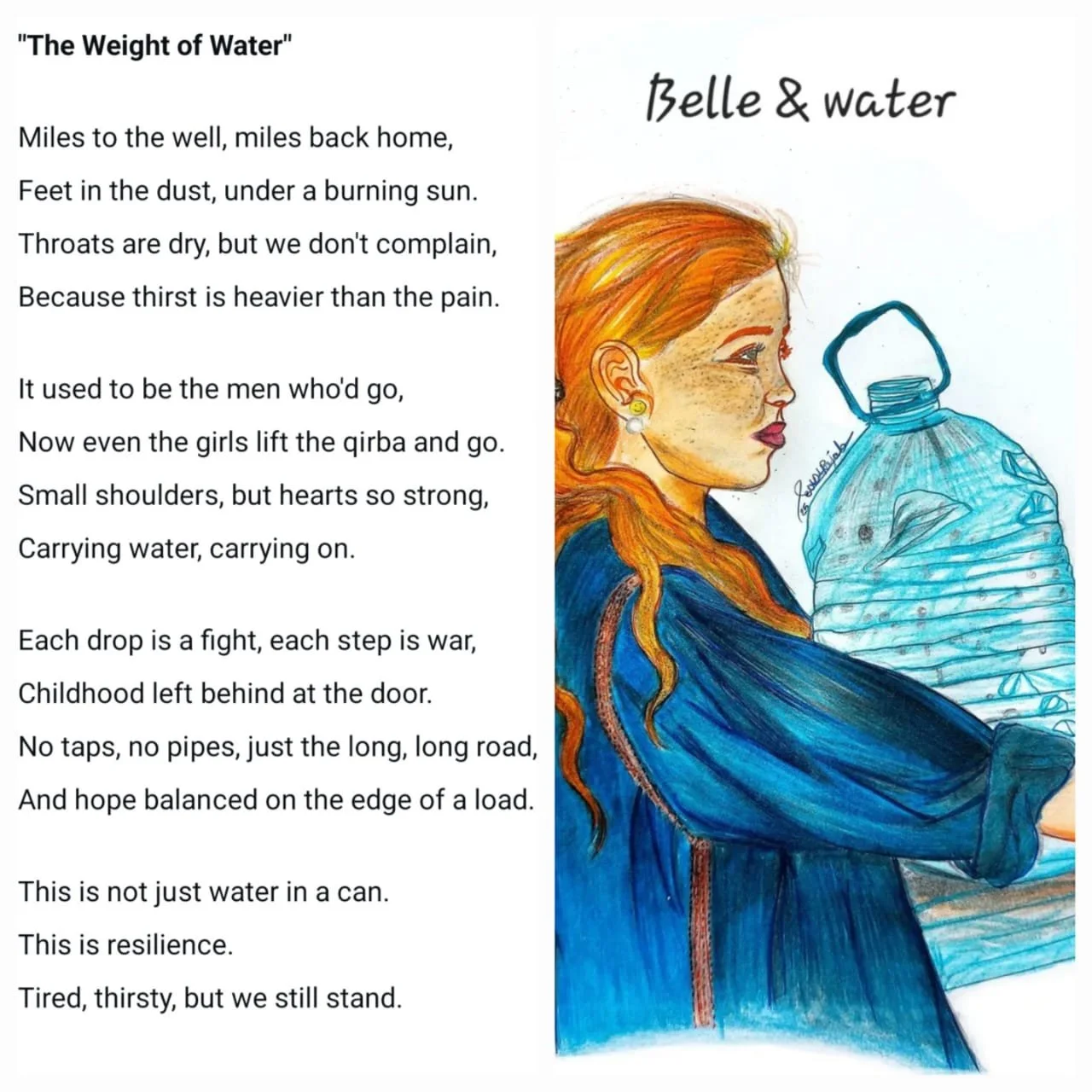
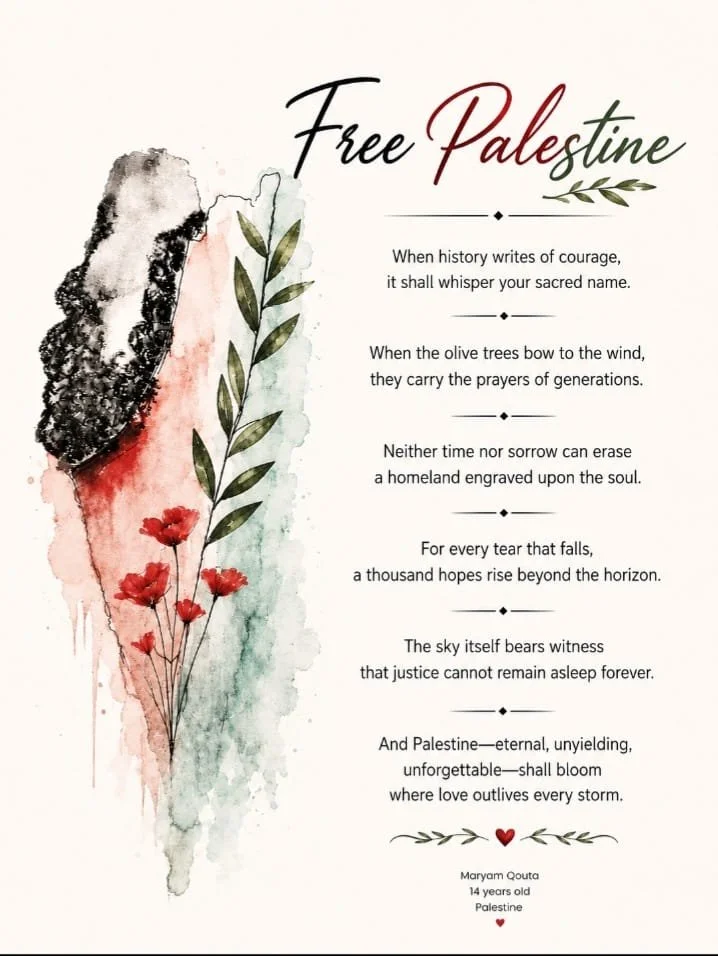
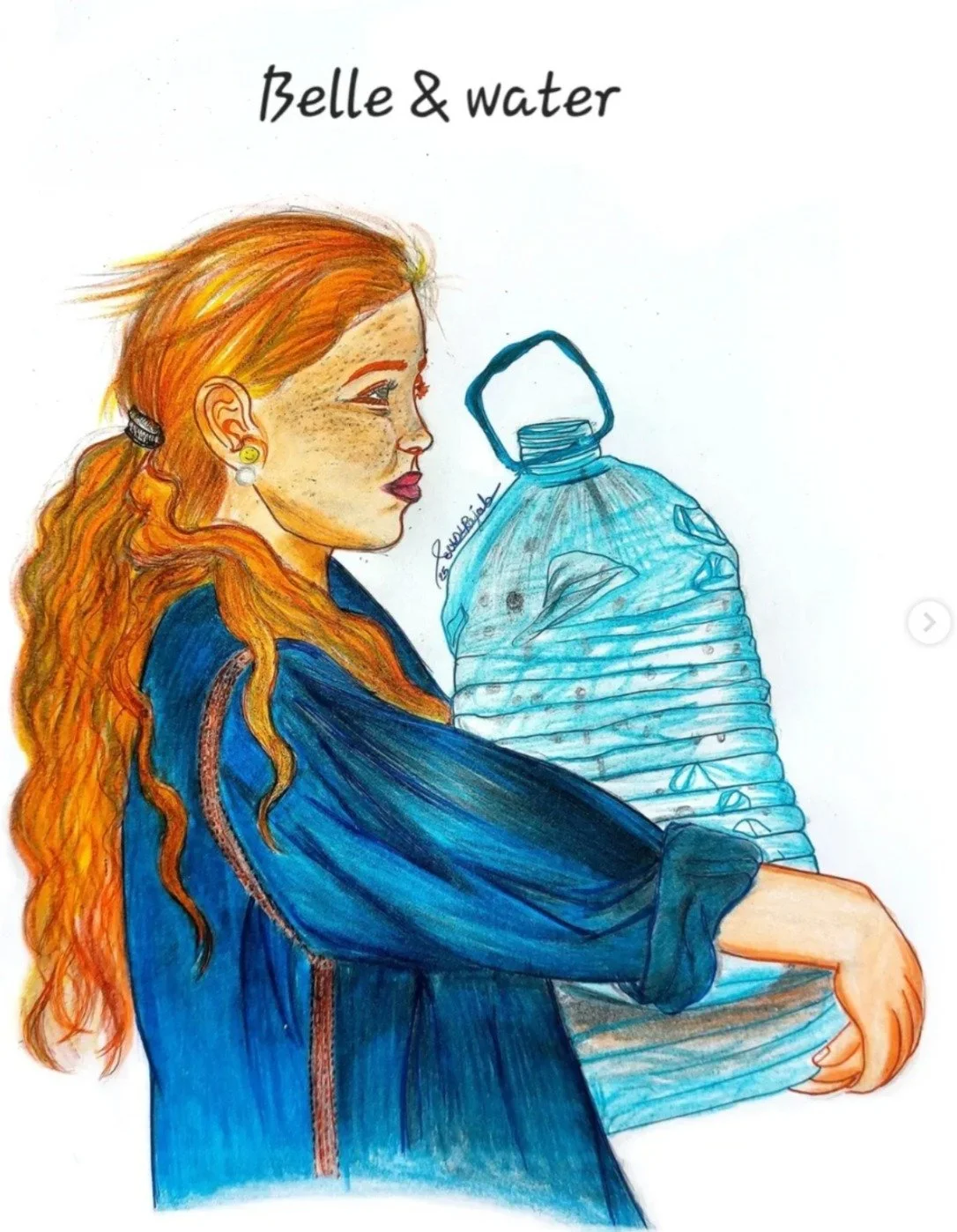
A B C D E F G
All I want is to be free
Like a bird upon a tree
With a sky for you and me
No more dark, just light to see
No more walls, we need the key
To a home beside the sea
Where my family can be
Sleeping safe and peacefully
No more crying on my knee
Listen to my only plea
Let our children grow and see
What a happy life can be
All I want is to be free.
Jana Gazi El-Yazgi🪆
About our creative writing workshop
Before the session, I sent Majd seven poems written by HUP students, from Moon Tell Me Truth, Oh Big Blue, and From Dust We Rise, and some questions to help her students prepare.
I asked them to choose their favourite poem, think about its themes, and what they liked about it, and consider its main message.
Guided by Majd, the students responded in very different ways. Some prepared elaborate, more formal presentations, complete with slides; others spoke directly into the camera, speaking naturally and fluently; others answered the questions one by one; and one younger student read her favourite poem.
As usual, I was moved by their responses: by the poems they chose and why they chose them, by the messages they found in them, and by the way they made those messages their own through their presentations.
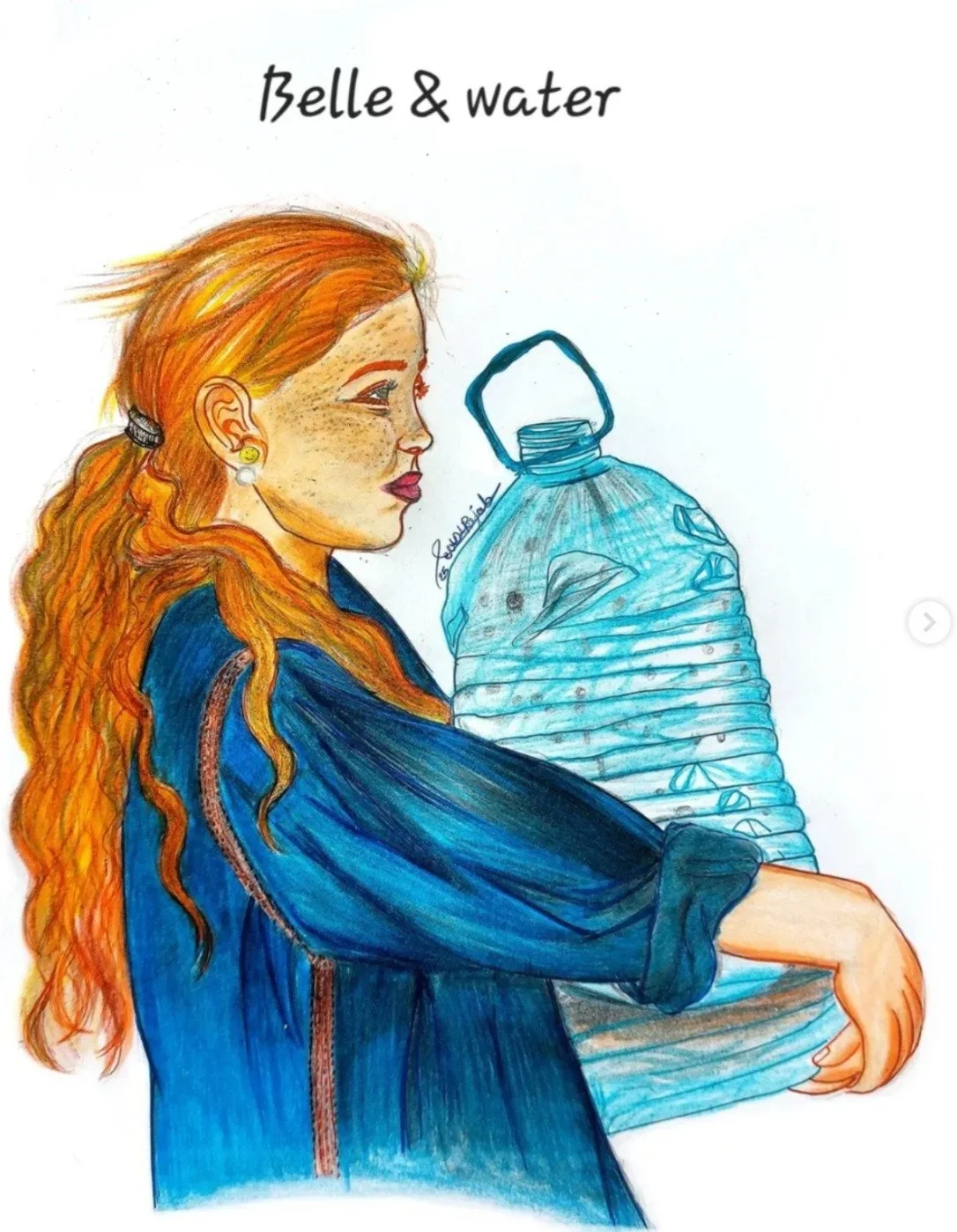
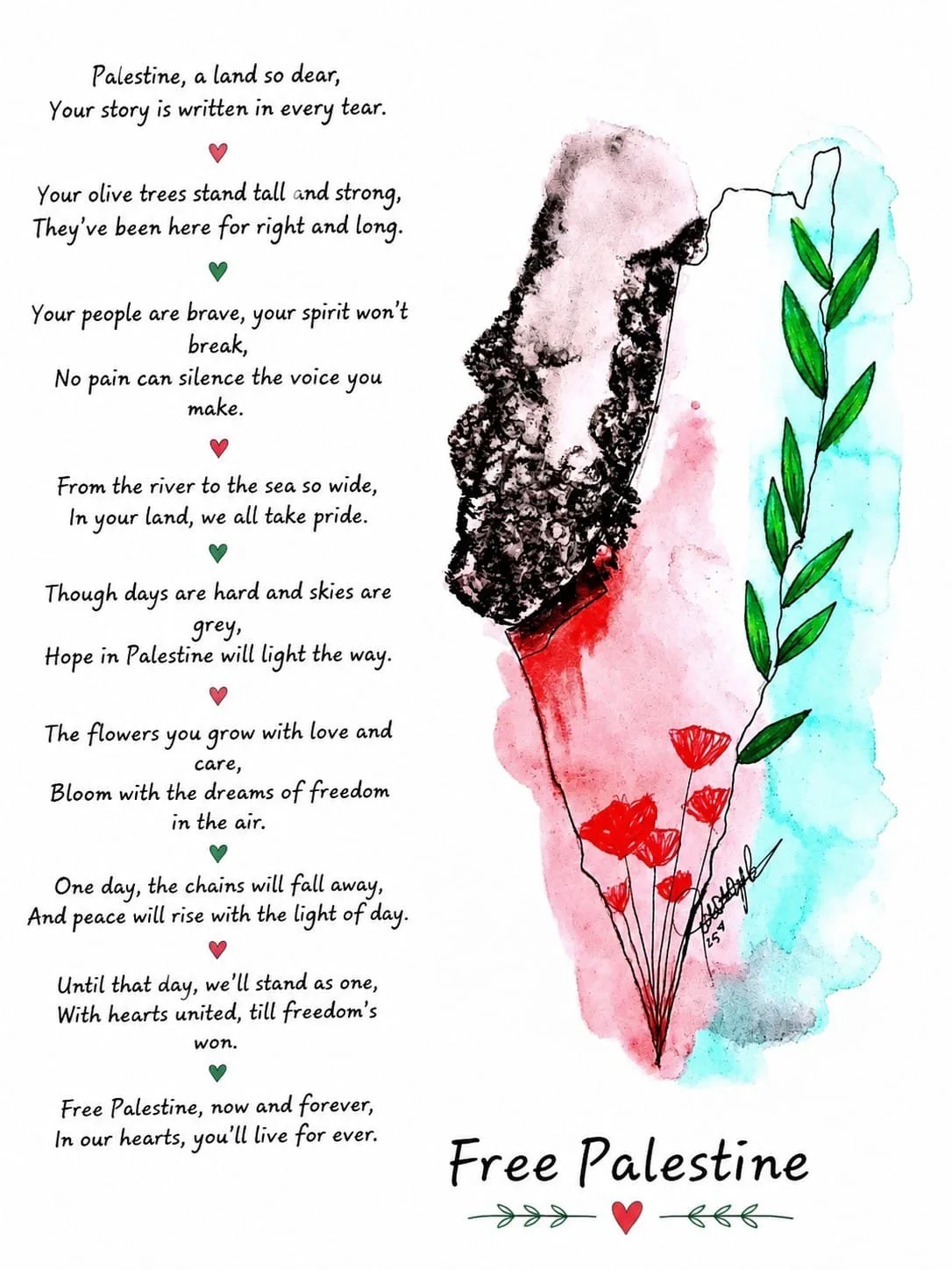
We then moved on to creative writing exercises, including poetic check-ins, some free writing inspired by artwork from the Art from the Rubble (Nada Rajab) and Scattered (Yara Youssef), and more sharing and responses, both orally and in the chat.
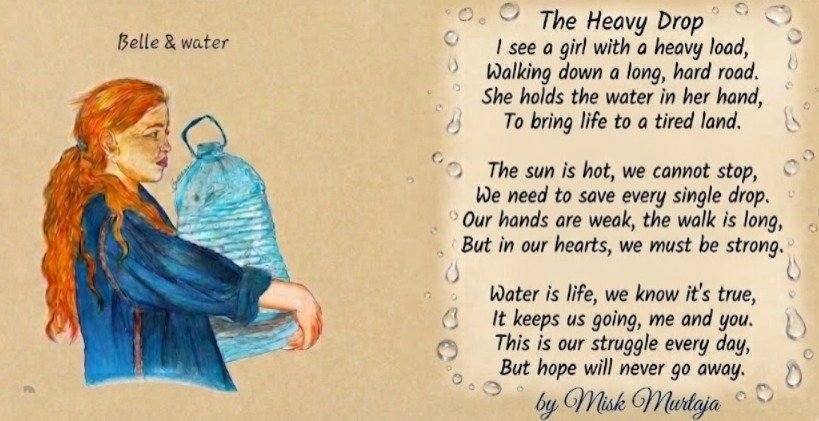
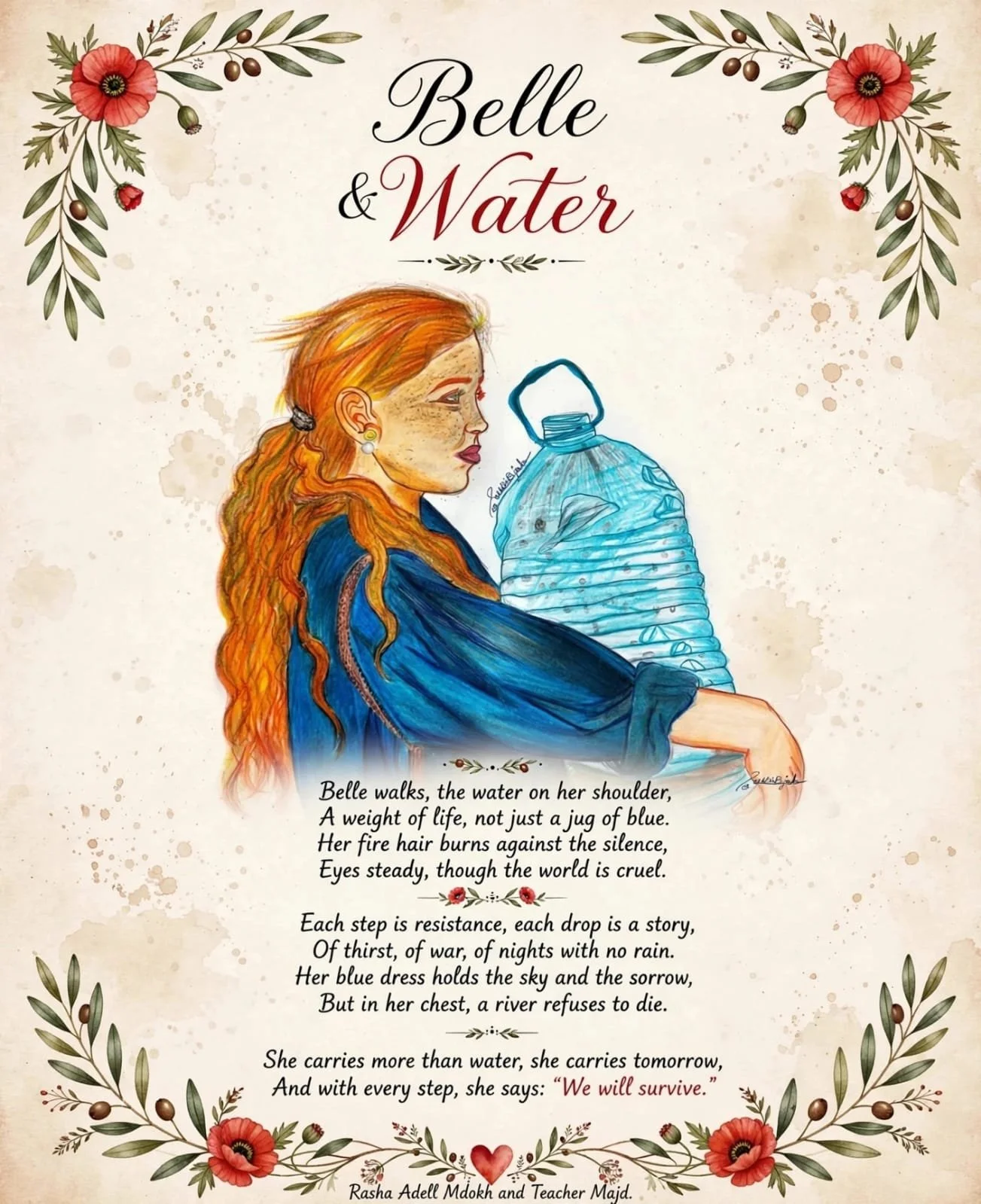
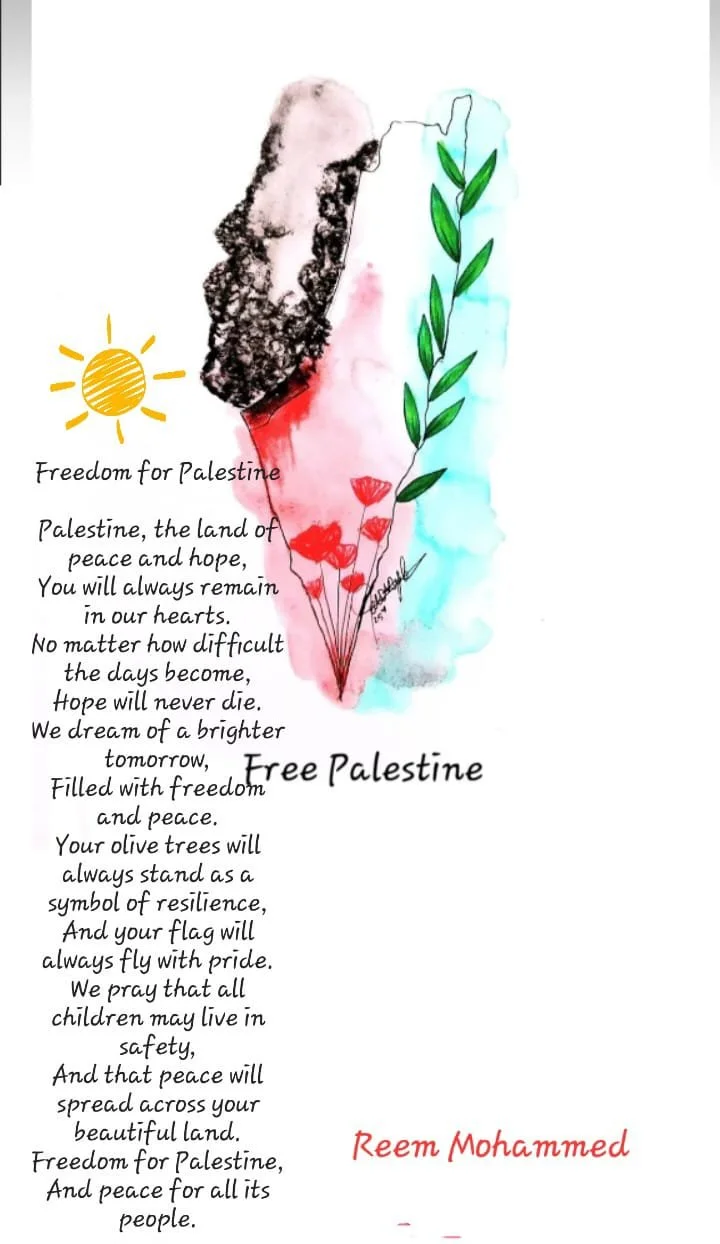
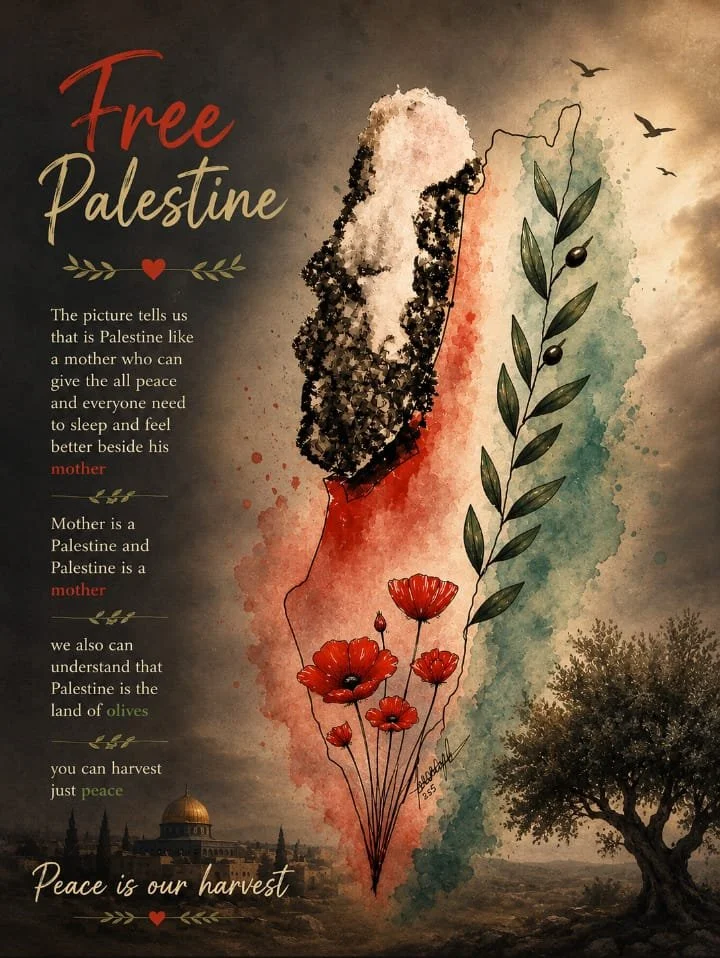
Finally, the students chose a piece of art and wrote a poem in response to it. As time was short, they finished their poems after the session, and Majd sent them on to me. I enjoyed leaving an audio for each one of them, telling them what I liked about their poems, and it was so wonderful to receive audio responses from some of the students!
Majd and I are hoping to do more creative writing workshops where the students have more time during the session to experiment with language and poetry, and to share some of their more ‘raw’, less polished work. Watch this space for more poems by the students.
In the meantime, I leave you with these lines from Lama Almanamah’s poem: Palestine is the land of olives, you can harvest just peace. Peace is our Harvest.
In gratitude.
Rebecca